Security scares – the real meaning of ‘secure’ front doors
Security scares – the real meaning of ‘secure’ front doors
Front door security is often marketed through fear, with homeowners encouraged to believe that one particular lock or piece of hardware will solve everything. But good security needs clear information, a properly designed product and an installer who can explain what you are buying.
So, what should “secure” actually mean when you are choosing a new front door?
Security is about the complete doorset
The first thing to understand is that a front door is not simply the panel you see. A complete doorset includes the door leaf, its frame, the hardware and any integral sidelight or toplight.
All those parts need to work together. A strong lock cannot compensate for a weak frame. Substantial hinges will not help if they are poorly fixed. Security glazing is only as effective as the system holding it in place.
That is why it is better to judge the entrance as a complete system rather than comparing individual components in isolation.
Feel safe with a secure steel & aluminium door and frame
The door should feel substantial and sit squarely within a strong, correctly fitted frame. When closed, it should meet the seals evenly and should not need to be lifted, kicked or pulled into position before it can be locked.
The frame needs to be securely fixed to the surrounding structure. Unexpected movement, large gaps or repeated misalignment should be investigated because they can affect how reliably the locking system engages.
Look beyond the number of locking points
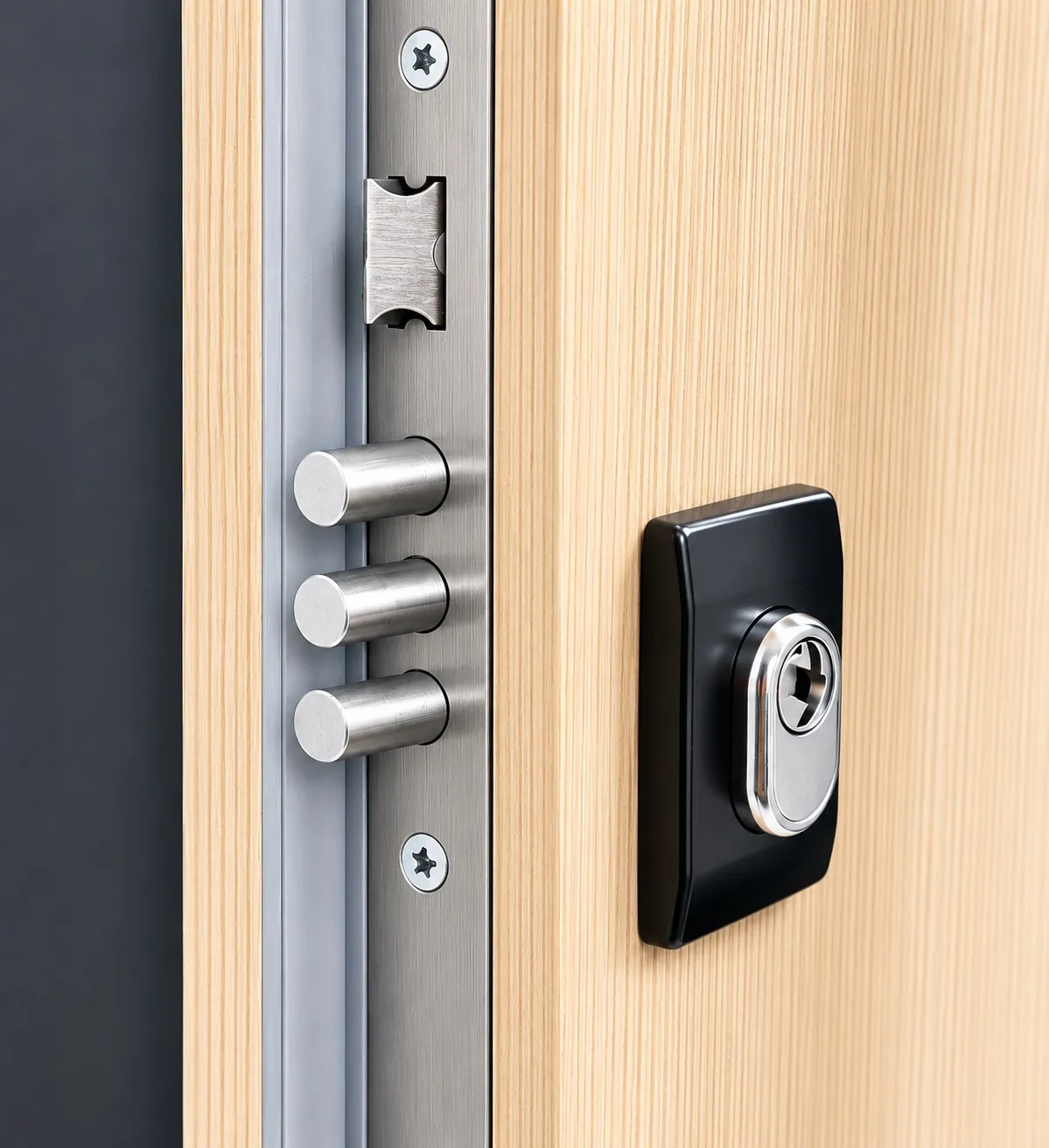
Multiple locking points can distribute locking around the door, but quantity alone does not tell you how secure the entrance is. The lock, cylinder, handles, keeps and fixings all matter, along with the way they interact with the frame.
The lock should operate smoothly. If the key becomes difficult to turn, or only some locking points engage, have the door checked rather than treating stiffness as normal.
Do not overlook hinges and hardware
Hinges carry the door and help maintain its alignment. Their design and fixings should suit the particular door, including whether it opens inwards or outwards.
Handles and cylinders should also be properly specified. Ask how the complete hardware package has been assessed as part of the door.
Think about glazing and other openings
Glazing can bring natural light into the hallway and make the entrance more inviting. It also needs to be included in the security assessment.
Ask what glass is used, how it is retained and whether the tested doorset covers your chosen design. The same applies to sidelights, toplights, letter plates and other access features. A specification change can alter the configuration originally assessed.
Installation makes the product promise real
Even a well-designed, independently tested doorset still needs careful installation. Accurate measurement, suitable fixings, correct alignment and proper adjustment allow the locks, hinges, seals and frame to perform as intended.
This is why the installer matters as much as the product. Homeowners should feel able to ask who will fit the door, what experience they have and who will take responsibility if an adjustment or aftercare visit is required.
Ask for independent evidence
Independent testing gives customers something more useful than a vague claim that a door is “high security”. In the UK, PAS 24:2022+A1:2024 sets enhanced security performance requirements for doorsets and windows intended to resist methods associated with opportunistic burglary.
The important word is doorset. Testing the lock alone is not the same as assessing the complete door assembly.
Certification and test evidence can also be configuration-specific. Before relying on a badge or headline, ask whether the evidence applies to the exact door, frame, glazing, hardware, sidelight and toplight arrangement you are buying. A good supplier or installer should be able to answer clearly.
Check how the door behaves every day
Security is not only something to consider on installation day. Occasionally check that the hardware remains firm, the glazing is intact and all locking points engage cleanly.
If anything changes, seek professional advice early. A straightforward adjustment is easier to address before it becomes a larger problem.
Reassurance rather than fear
A secure front door should not make homeowners spend their time imagining the worst. It should quietly provide confidence each time they leave the house, return home or lock up for the night.
For Gerda, that confidence is expressed in a particularly simple way: the solid thunk of a steel or aluminium door closing properly behind you. The sound is reassuring because it reflects something physical — a substantial doorset, precisely fitted and operating as it should.
Ultimately, “secure” should mean more than a lock, a badge or a sales claim. It should mean a complete entrance that looks right, feels solid, locks smoothly, has credible independent evidence behind it and is fitted by somebody prepared to look after you.
No frightening stories required.