Does the security certificate cover the whole front door?
Does the security certificate cover the whole front door?
Security certificates can be reassuring when you are choosing a new front door. They suggest that somebody independent has looked beyond the sales brochure and assessed whether the product meets a recognised standard.
But there is an important question to ask before relying on any badge or certificate: what, exactly, does the security guarantee cover?
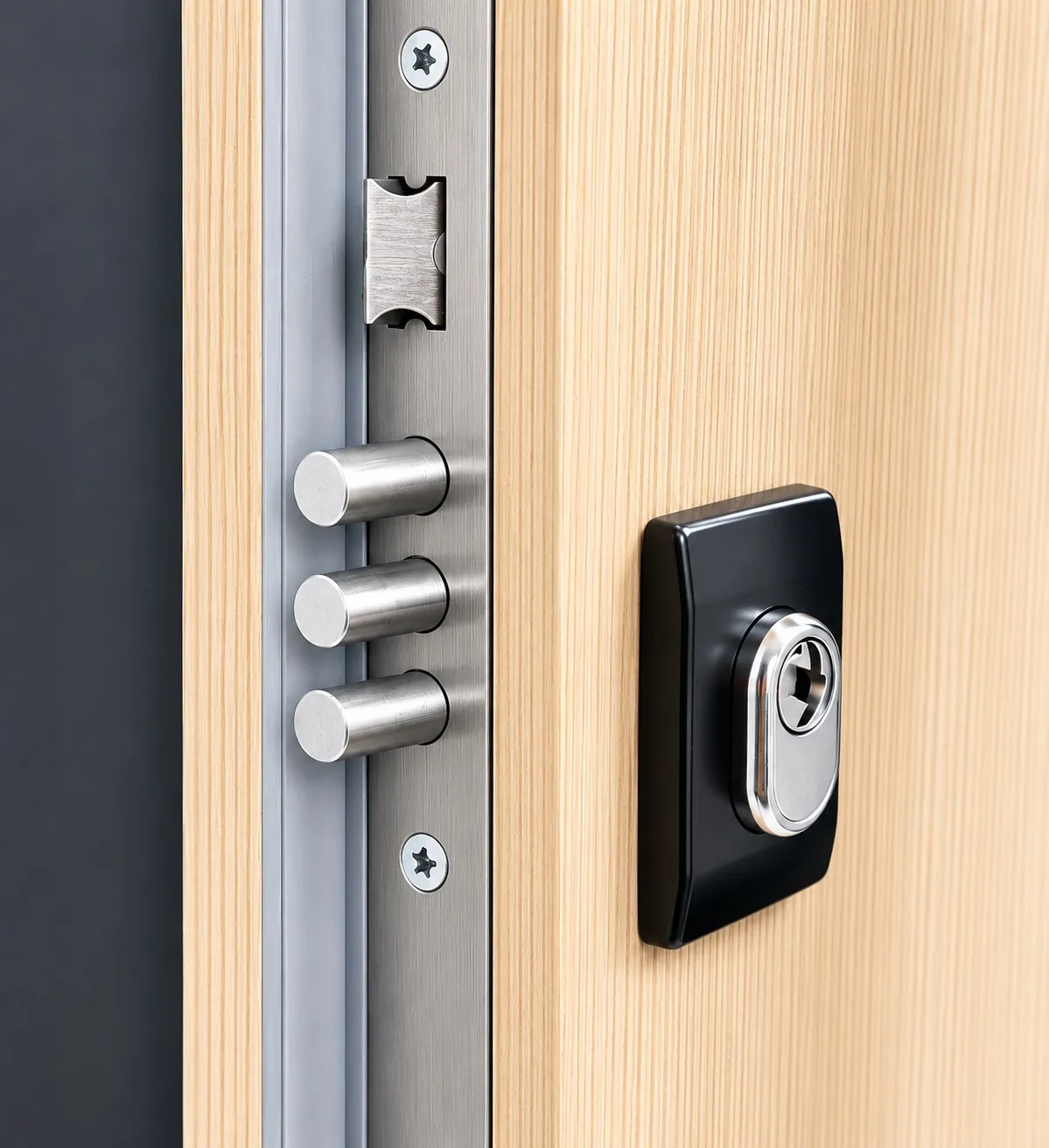
A lock can be tested. So can a cylinder, a piece of glass or another individual component. That evidence may be useful, but it does not automatically prove the security performance of the complete door you are buying. A secure entrance depends on the door leaf, frame, locks, keeps, hinges, glazing and hardware working together as one system.
A strong component does not prove a secure entrance door
Imagine fitting a very good lock into a weak or poorly matched frame. The lock may have performed well in its own test, yet the complete entrance could still have weaknesses elsewhere. The same principle applies to hinges, glazing and other hardware. Each part matters, but the way those parts are combined matters too.
This is why phrases such as ‘security-tested lock’ and ‘tested door’ should not be treated as interchangeable. The first may describe one part. The second should be supported by evidence that applies to the doorset as a complete manufactured unit.
What PAS 24 covers
PAS 24:2022+A1:2024 is the current UK standard setting enhanced security performance requirements for doorsets and windows intended to resist methods associated with casual or opportunistic burglary. For a door, the assessment concerns the doorset rather than a loose collection of components.
Secured by Design, the official police security initiative, defines a doorset as the complete assembly: the frame, door leaf or leaves, hardware and any integral side panel or fanlight. This matters because the test examines how the manufactured product performs as a whole.
PAS 24 is not a star rating and it does not tell you that one passing door is ‘more secure’ than another. It sets acceptance criteria. Nor does it assess the quality of installation on your property. Those limitations do not weaken the value of the evidence; they explain what the evidence can and cannot prove.
Read the front door security scope as well as the headline
A certificate is only useful when it applies to the product and configuration being supplied. The supporting scope or schedule should identify the relevant doorset range and the approved variations. Depending on the certification scheme, it may cover more than one size, design or hardware option, but you should not assume that every possible combination is included.
Ask whether the evidence covers your chosen door material and model, its frame, lock, cylinder, handles, hinges and glazing. If your entrance includes a sidelight, fanlight, letter plate or other opening, ask whether that feature is within scope as well.
This is especially important when options have been changed after the original quotation. A different glazed panel or hardware package may still be an approved variation, but the supplier should be able to confirm that rather than asking you to take it on trust.
Testing and certification are not quite the same
A test report records how a specimen performed when it was tested. Product certification normally adds continuing independent oversight under a defined scheme. The certificate should name the product or range, the applicable standard and the organisation responsible for certification.
You do not need to become an expert in technical paperwork. Ask the installer to show you the current certificate and its scope, then explain in plain English how they relate to your proposed door. If the paperwork refers only to a lock, cylinder or piece of hardware, ask what evidence supports the rest of the doorset.
Installation still matters
PAS 24 applies to a new doorset as manufactured, before installation. The final result at your home therefore depends on accurate measuring, suitable frame fixings, correct alignment and careful adjustment. A door that does not sit properly in its frame may not lock or seal as intended, regardless of the evidence behind the product itself.
Ask who will fit the door, what installation standards they follow and who will handle any adjustment or remedial work. Product evidence and good installation answer different questions; you need confidence in both.
A calm question that cuts through the claims
When a supplier says that a door is certified or tested, you do not need a long technical debate. Simply ask: ‘Does that evidence cover the complete door, frame, hardware and glazing combination I am buying?’
A reputable supplier should welcome the question and give you a clear answer. If you are considering a Gerda steel or aluminium front door, ask your installer which independent evidence applies to the exact model and configuration on your quotation.
Real reassurance does not come from the largest lock diagram or the boldest security claim. It comes from knowing what has been assessed, what is included and who will fit the door properly. Then, when your new front door closes with that familiar solid thunk, the confidence behind it rests on evidence rather than assumption.