How to check and prevent front door draughts
How to check and prevent front door draughts
A cold hallway does not automatically mean that the front door itself has failed. Air can enter around worn seals, beneath the threshold, through a letterbox or through the joint between the frame and the surrounding wall.
Before deciding you need a new door, spend a few minutes locating the source of the draught. This can separate simple maintenance from an alignment or installation issue.
Choose the right time to check
Choose a cool, breezy day when the difference between indoor and outdoor conditions is noticeable. Close nearby windows and internal doors, then stand in the hallway and identify any consistent movement of air.
Use the back of your hand or hold a light piece of tissue near the door. Move slowly around the edges, across the threshold and past the letterbox. Repeated movement in one place can reveal an air path. Avoid candles, matches or smoke around curtains or flammable materials.
Check the perimeter seals
The flexible seals around the door should make even contact when the door is closed. Look for flattened, split, loose or missing sections. Dirt, paint or small pieces of debris can also stop a seal from compressing properly.
A simple paper test can reveal an uneven fit. Place an ordinary strip of paper between the door and frame, close the door normally and pull the paper gently. Repeat the test at several points. The paper should offer reasonably consistent resistance. If it slides out easily in one area but grips firmly elsewhere, the door may need adjustment or the seal may be worn.
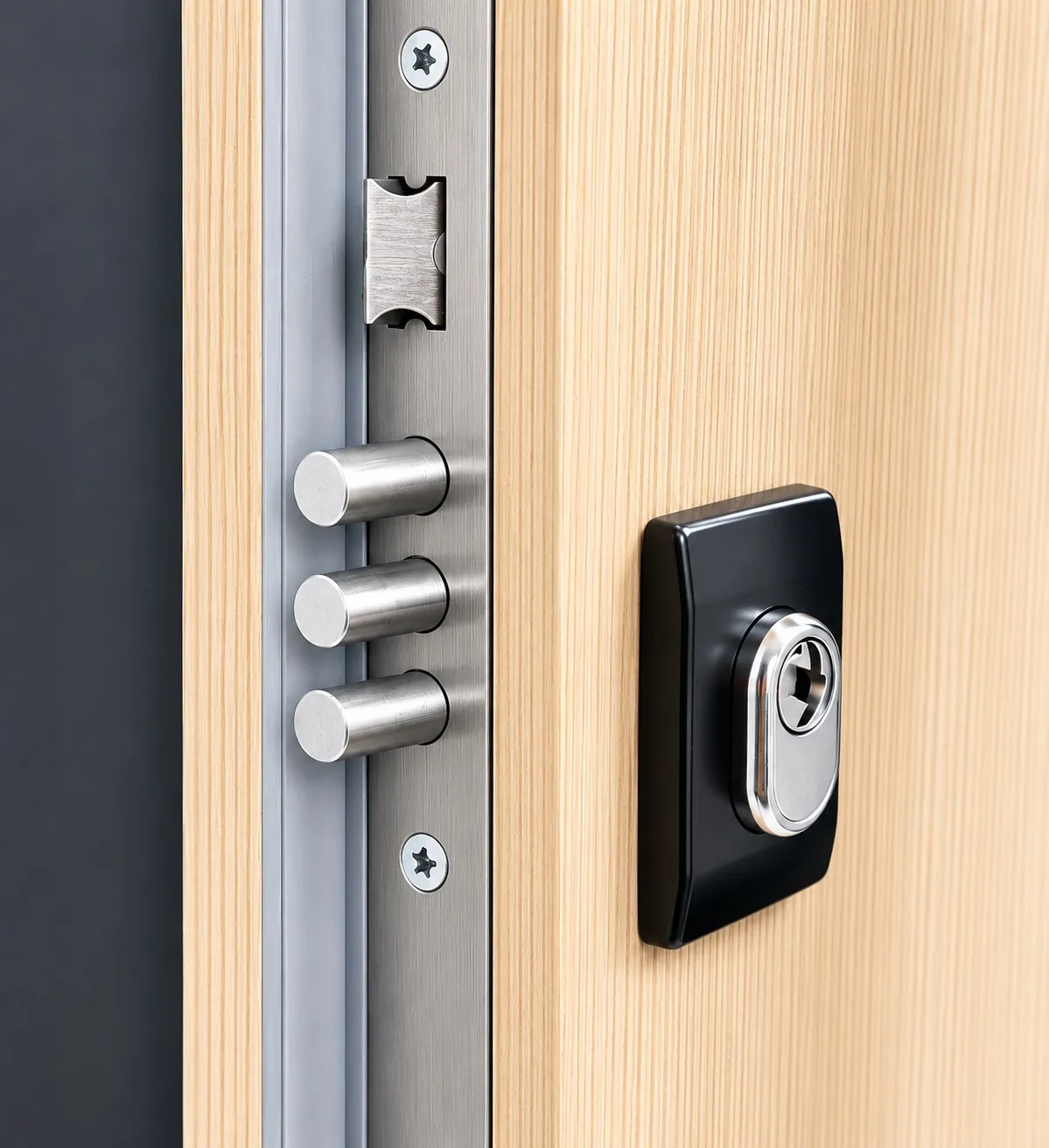
Do not force the lock or repeatedly slam the door to make it seal. A door that needs lifting, pulling or pushing before it will lock should be checked by the installer or another suitably qualified professional.
Look closely at the threshold
Cold air at floor level often points towards the threshold rather than the main door panel. Check for grit, leaves and other debris that may prevent the door from closing fully. Examine any visible gasket, brush or weather seal for gaps and damage.
If the draught appears at one bottom corner, the door may not be sitting squarely. If it runs across most of the width, the threshold seal may be worn, incorrectly adjusted or unsuitable for the gap. Threshold adjustments affect the doorset, so ask for professional help if the correct setting is not obvious.
Test the letterbox
A letterbox is a deliberate opening through the door, which makes it an obvious place to check. Make sure both flaps close properly and that any internal brush or draught seal is intact. Hold the tissue near the edges and centre of the closed flap to see whether air is passing through.
A suitable replacement flap, brush or compatible draught seal may improve matters. Check with the door supplier before changing the letter plate, because its size, construction and fitting can also affect security and other assessed performance.
Inspect the frame and surrounding wall
If the seals, threshold and letterbox seem sound, check where the frame meets the wall or reveal. Air entering here may feel as though it is coming through the door even though the gap sits behind trim, sealant or plaster.
Look for cracked or missing sealant, loose trim, movement around the frame or a localised cold line beside it. Do not simply cover a substantial gap with decorative sealant. The underlying fixing, insulation or weatherproofing may need inspection, particularly if you can also see damp staining or water penetration.
A cold surface is not always an air leak
Large areas of glass or a cold door surface can create downward-moving cool air inside the hallway. This can feel like a draught even when no outside air is entering. Your tissue test helps distinguish the two: a genuine leak produces repeatable movement at a particular gap, while a cold surface may create a broader sensation without a clear entry point.
Condensation is another clue to investigate rather than ignore. It may reflect indoor humidity, ventilation or a cold spot, and it does not prove that the door is leaking air.
Fix the cause rather than the symptom
Cleaning the threshold, removing debris or replacing an approved worn seal may solve a straightforward problem. Alignment, hinge adjustment, locking keeps, threshold settings and gaps between the frame and wall are better left to somebody who understands the complete doorset.
Do not block intentional ventilation such as air bricks or purpose-designed vents in an attempt to make the hallway warmer. They may be needed for moisture control or safe ventilation elsewhere in the home.
A properly fitted front door should close smoothly, meet its seals evenly and keep normal British weather where it belongs. If you are considering or already own a Gerda steel or aluminium door, your installer should be able to check its alignment, seals and installation before anyone assumes that the door itself needs replacing.
The reassuring Gerda thunk should be followed by a hallway that feels comfortable too. Finding the exact route taken by the air is the sensible place to start.